Friday, April 20, 2018

M42 camera bodies and lenses


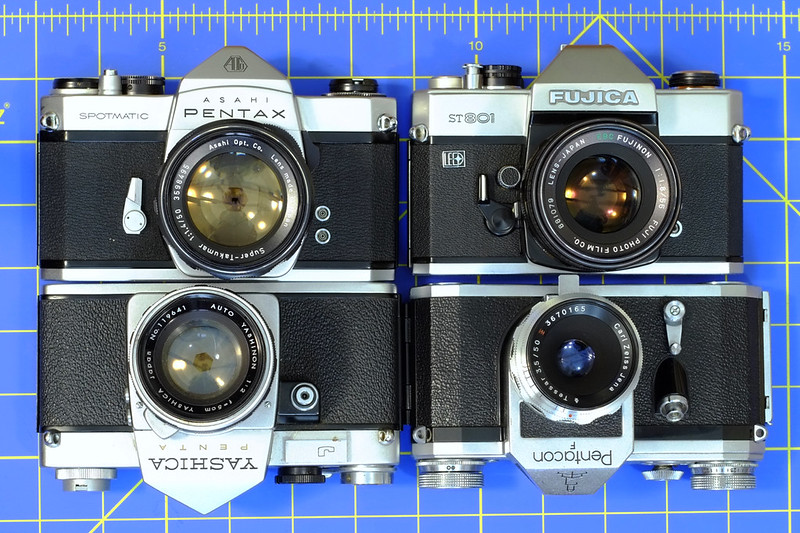
A quartet of M42 SLRs
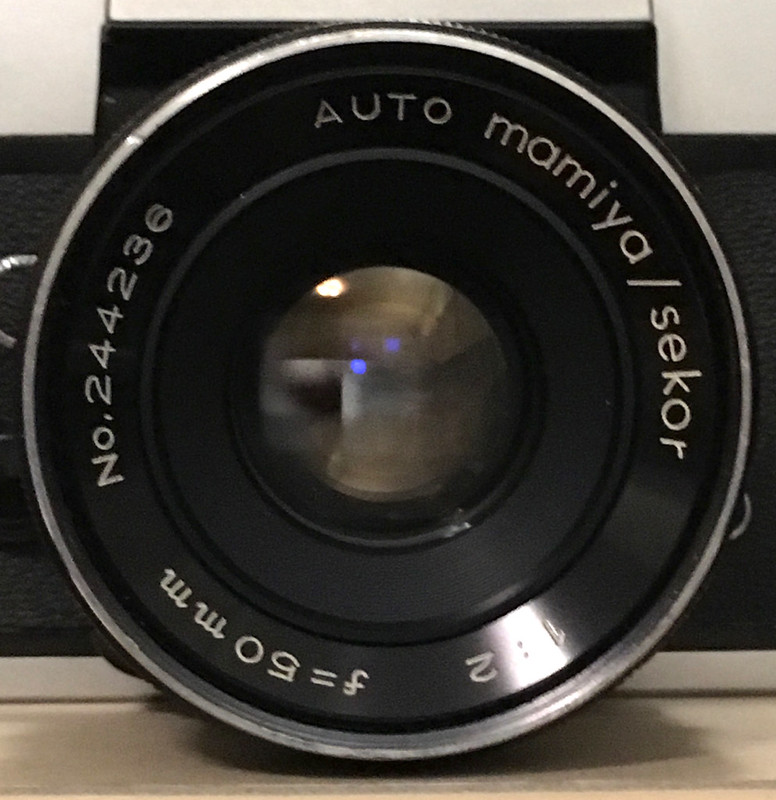
Between 2016-2017 I acquainted myself with these mechanical M42 SLR cameras and lenses. These four camera bodies left a lasting impression on me for personal, historical and sheer shooting pleasure along with the lenses I used them with. Aside from shooting film, I also adapted the lenses to my trusty Fuji X-E1.


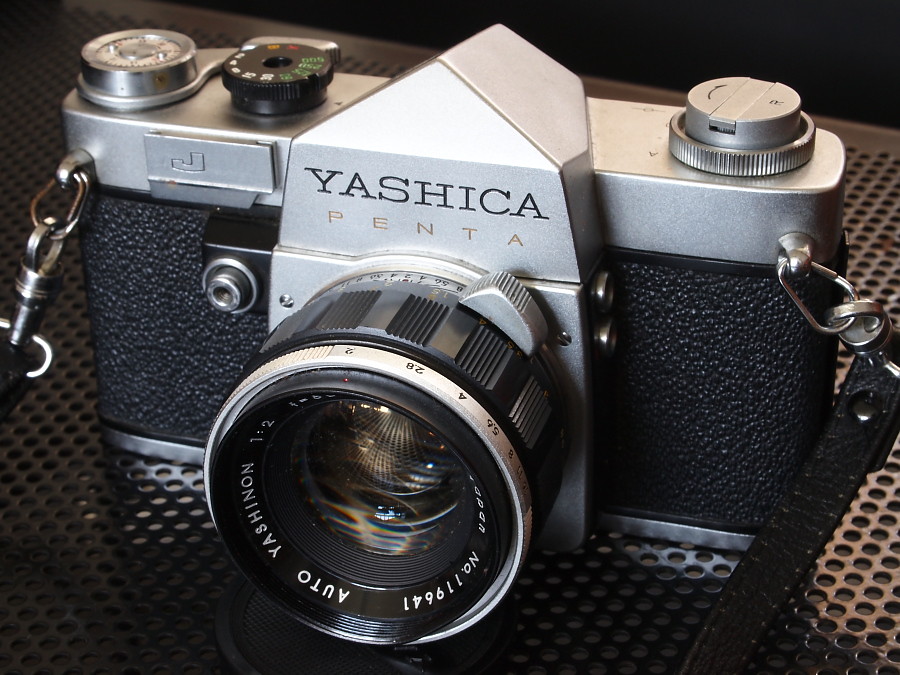
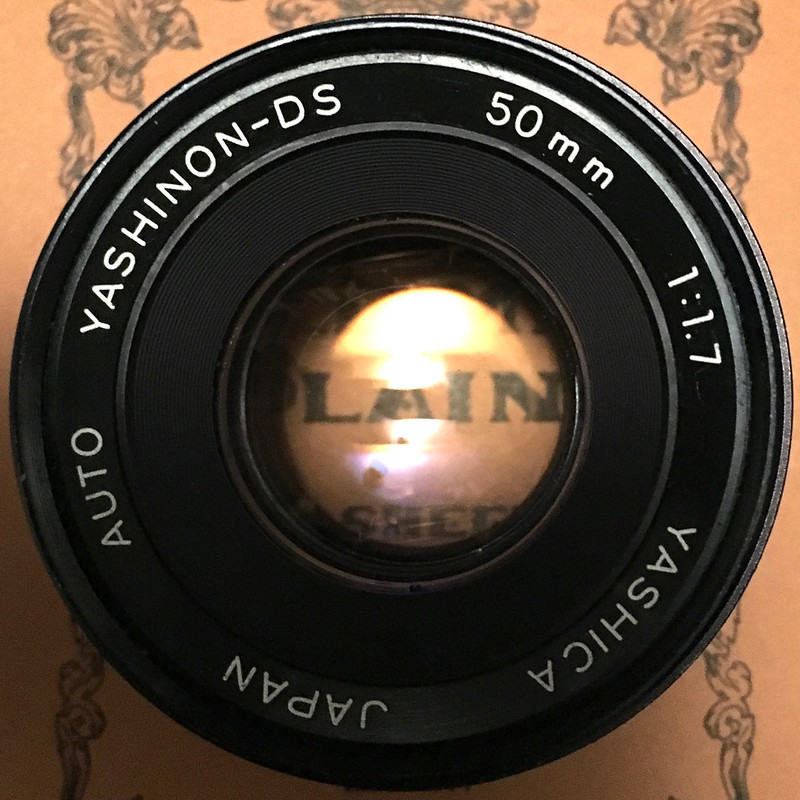
Yashica Penta J + Yashinon 5cm  f2
I have a special affinity for the Yashica Penta J since my dad taught me how to take pictures using this camera. This was the first M42 mount body produced by Yashica. It doesn't have a light meter and the shutter speeds are limited from 1/2-1/500 + B but the viewfinder is fairly bright (at par with the Pentax Spotmatic) assisted by a split image focusing screen. The standard Yashinon 5cm f2 lens is rather special and has caught the attention of aficionados which has driven its value up recently.


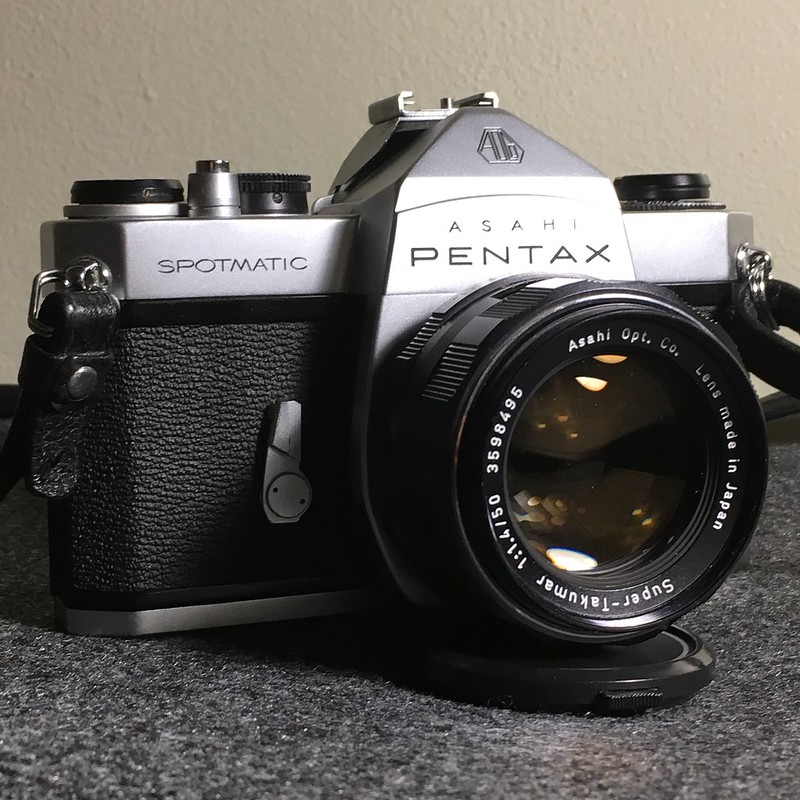
Pentax Spotmatic SP + Super Takumar 50mm f1.4
This is the camera most closely associated with the M42 mount. It gets more credit for popularizing the M42 screw mount than the much earlier Zeiss-developed Contax S later known as the Pentacon SLR, shown below. It is similar in size to the Yashica above with a similar spec'ed viewfinder but equipped with more comprehensive shutter speeds from 1s-1/1000 + B. The built-in light meter is broken on this flea market find. I bought this camera primarily because of the sought after Super Takumar 50mm f1.4. 


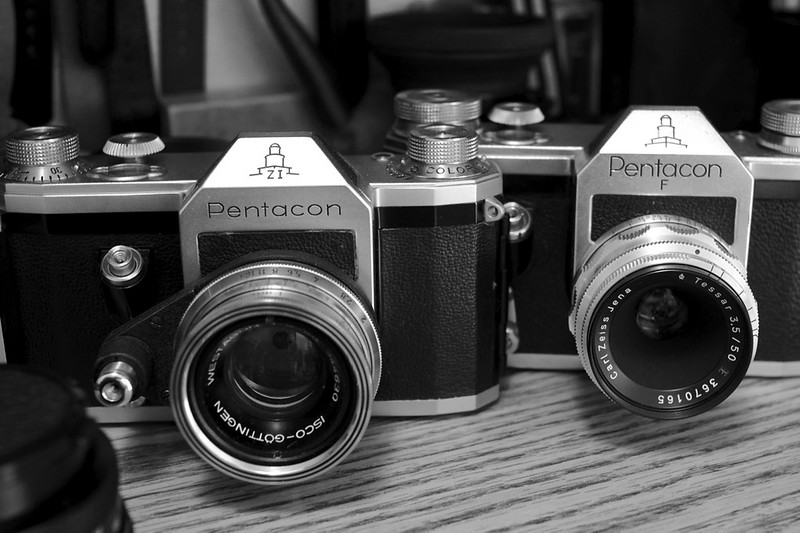
Pentacon ZI + Isco-Gottingen Westagon 50mm f2
Pentacon F + CZJ Tessar 50mm f3.5
These two immediate descendants of the Contax S were manufactured in the former East Germany by Pentacon in the 1950s. They have a rather interesting shutter speed selector arrangement. There's a switch in the back which selects between slow (B-1/20) and fast (1/50-1/1000) shutter speeds. The shutter speed indicator wheel located behind a plastic window spins when the shutter is released. A very neat feature! Handling this camera is reminiscent of Leica screw mount bodies including the knob wind film advance. However, the compact and light body is ultimately let down by a rudimentary ground glass focusing viewfinder (tip: best used on a sunny day) and there's no instant mirror return. It was a time capsule shooting experience with these two cameras.

More info on Contax/Pentacon 35mm SLRs.

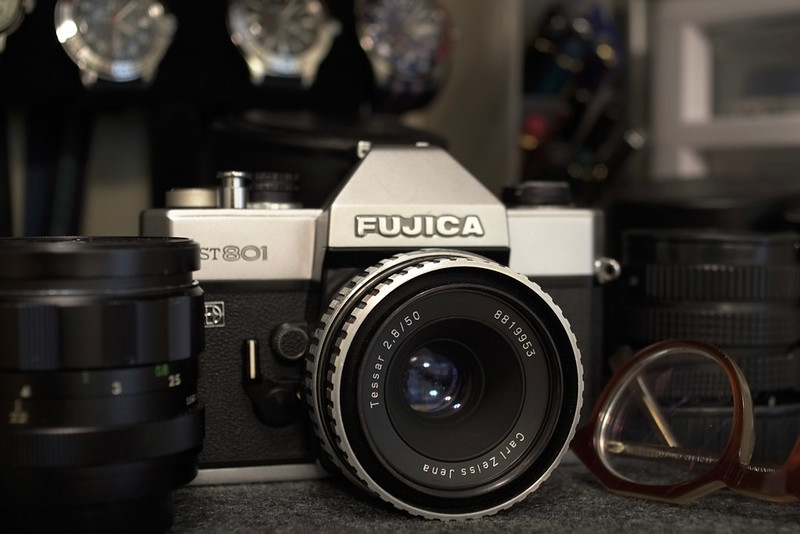
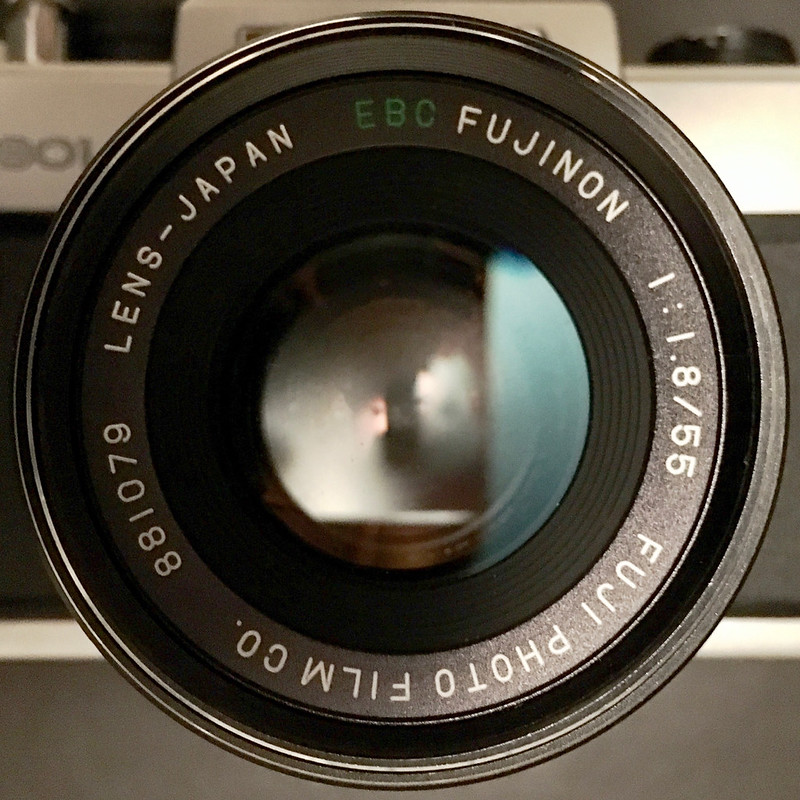
Fujica ST801 + Zeiss Jena Tessar 50mm f2.8
A very sophisticated mechanical M42 camera, the Fujica ST801 was very much ahead of its time. It sports a compact body, bright viewfinder fitted with a split image prism, 1s-1/2000 (!) shutter speeds + B with a built-in light meter which uses a 6V battery that is still readily available. This is my pick of the lot!

Lesser Fujica siblings
The Fujica ST701 has a top speed of 1/1000 and the light meter requires the obsolete Mercury cell. While the entry level ST605's light meter works with modern batteries, the top shutter speed is only 1/750. Nevertheless, these two cameras share the same compact body and bright viewfinder with its top of the line brother - ST801.


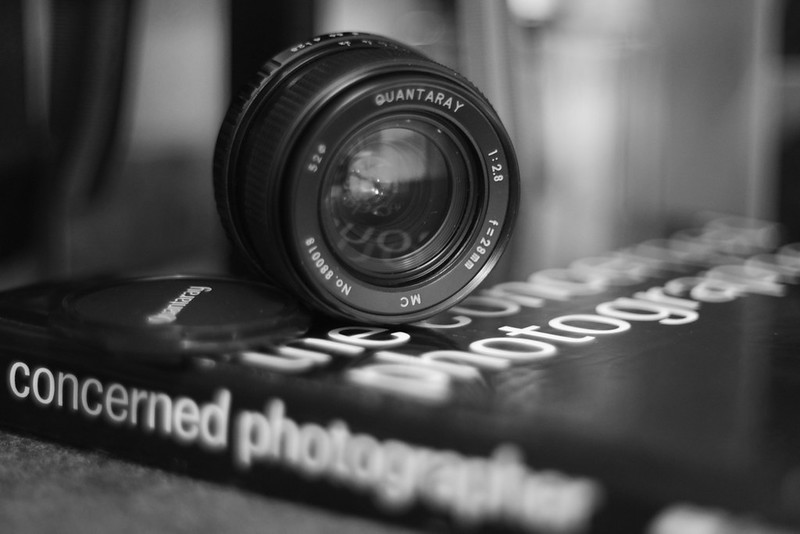
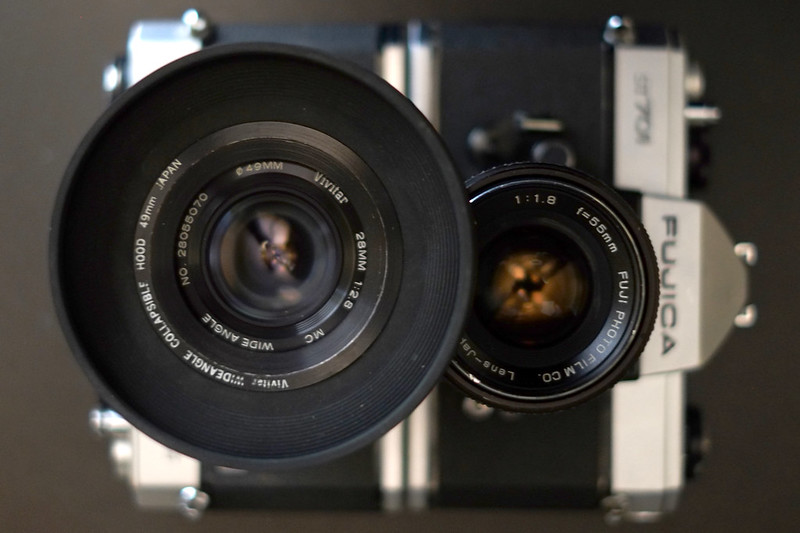
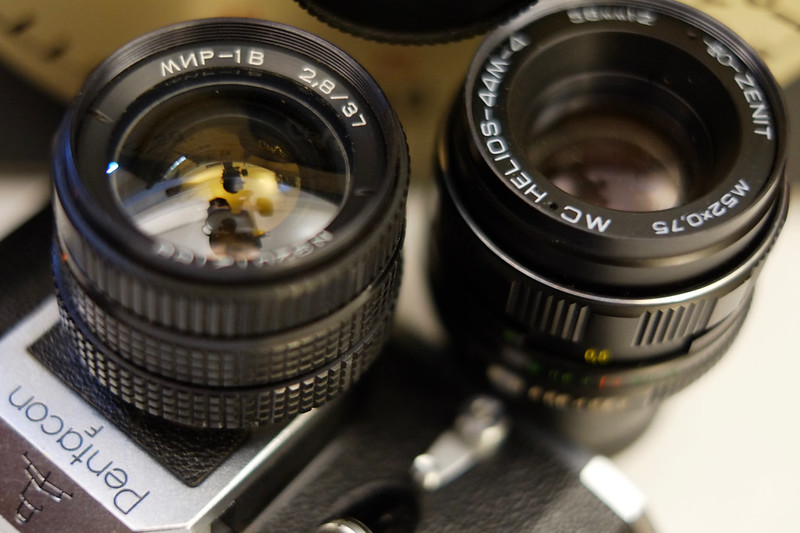
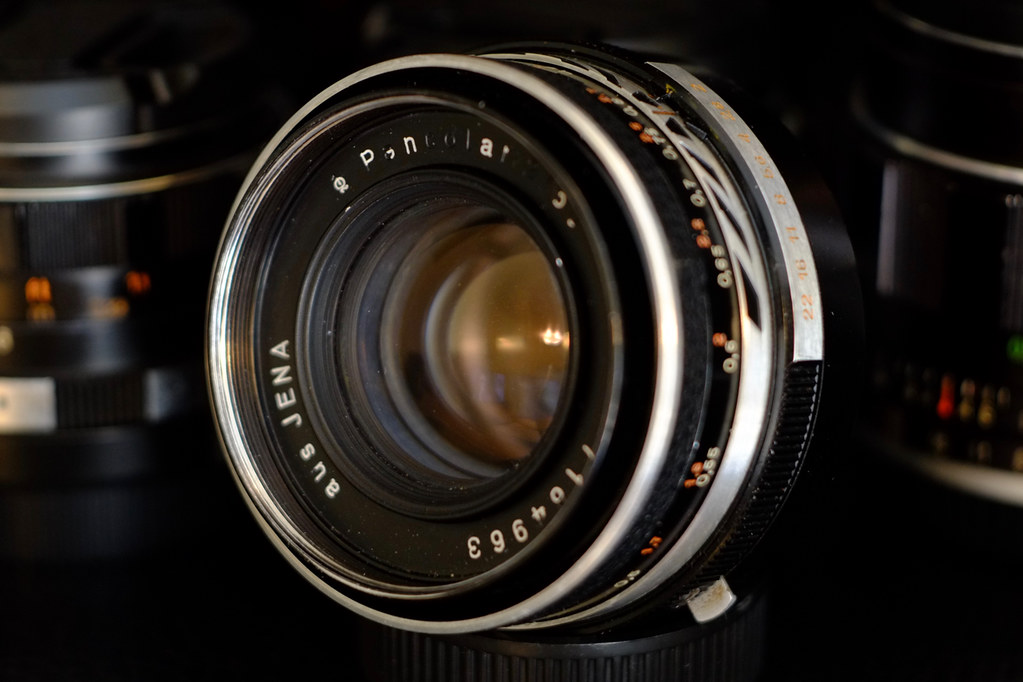
M42 lenses

Thursday, April 5, 2018

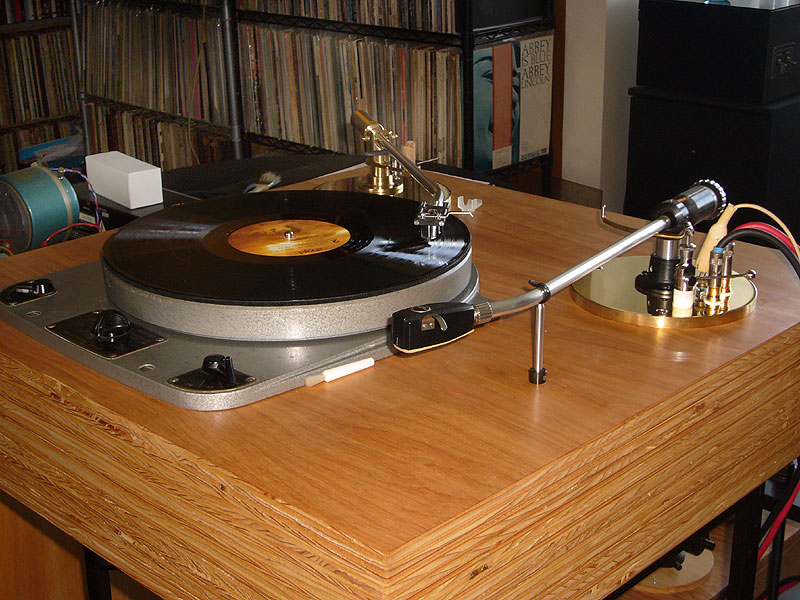
Garrard 301 - minor restoration

ca. 2003

I acquired this early grey grease-bearing model at a Hamfest around '96. I was the only person willing to shell out $240, which was the firm asking price of an elderly gentleman.
Attic - ca. 2009

It travelled back to Manila with me in '08 where it had to endure the extreme humidity of the tropics. Despite the adverse conditions, its performance remained very stable during the 8 years spent there.

The original grey hammer tone finish had deteriorated due to corrosion so I asked my assistant to mask the important mechanical bits. 😉


I think she did a pretty good job. What do you think? 😁


I used Rust-oleum silver hammerite spray paint which is a lighter shade than the Garrard original.  


I cleaned, flushed and re-packed the main bearing with 2 NGLI grease. The motor had no issues, so I just put a few drops of oil. Unlike the E50 motor in the Thorens TD124 which needs periodic motor servicing, I've never opened the motor on this 301.


When I acquired the unit, the power switch was already broken. I've had this spare speed selector switch in my parts bin for over 15 years courtesy of my buddy Joel. While waiting for the paint to cure, I cut and filed it down to function as a power switch.

Not a bad fit. 😎


I cleaned up 15 years of dust and soot build up on the plinth and then applied sealer and wax.


Here's to many more years of service! 🍻
Sunday, March 25, 2018

XtremPro X1 USB DAC

I was too wound up after playing a gig one winter Sunday evening. Watching episodes of the Grand Tour over a couple shots of Ballantine Scotch Whiskey was not enough to relax my mind. So I ended up "window" shopping on Amazon. 

Thursday, March 8, 2018

Audio Silente parts for the Thorens TD124 + Mk. II

Thorens TD 124 Mk. I + Stax UA3NL

My Thorens TD 124 Mk. I and Mk. II have seen so much action and deserved pampering.

Tuesday, February 20, 2018

Conquering RFI in the 2C22/7193


Noisy and unstable 2C22/7193

Moving closer to civilization, this lovely sounding triode used as a voltage gain stage in my SE2A3 mono integrated amp had stability issues due to RFI. 


Since I persist in using these antediluvian devices, I had to find a solution.


A 150 ohm 1/2W CC resistor with the leads cut short soldered in series with the grid cap (insulate with heat shrink tubing) >> shielded cable terminated by an RCA plug (shield connected only at the RCA jack side) >> RCA jack (barrel grounded to chassis) solved the stability issue.

A well behaved 2C22/7193 

Thursday, February 1, 2018

Altec 32A, 32C, Emilar EH1210, EH800, EH500 and Faital Pro STH100


+ 


This is a cumulative report on horns I listened to and tested from May 2016 until the end of 2017. All the tests were done through the mono hifi rig using the above Altec 802 compression driver fitted with a GPA 34852 diaphragm + an Altec 414A in a repurposed Altec 861 cabinet running in full-range mode tied together by a 6dB/octave high pass crossover/EQ hinged at 2500 Hz. 

Wednesday, January 17, 2018

Wednesday, January 3, 2018

Altec 2-way XO Redux

This is an update on crossovers I use for the Altec 2-way speakers.

JEL N1600 Crossover


JEL N1600C + HF EQ
optimized for the 802 driver fitted with the original
16 ohm 20275 diaphragm

Friday, December 15, 2017

JE Labs Loctal Preamp


Motivated by Ding's octal version of the 834P, I quickly got my hands dirty punching out and painting a chassis. 


Loctal tubes


The concept of this project was to build a full function stereo preamp utilizing loctal tubes based on the schematics below.

Preamp circuit

!!!WARNING!!! 

The voltages found in this circuit can be lethal! 
Build at your own risk!!!

Power Supply

5AZ4 rectifier = 5Y3 on a loctal base

Line Stage


Zero feedback single gain stage direct coupled to a cathode follower line stage topology featuring the two medium-mu triodes below

The 7AF7 is very similar to the 7N7 and 6SN7
but has slightly less
transconductance and inter-electrode capacitance

7N7 = loctal based 6SN7

Phono


The stock EAR 834P circuit (above) used all high-mu 12AX7s with the second stage capacitor coupled to the cathode follower stage. While preparing this blog entry, I remembered that my dearly departed friend, mono aficionado Brian monofantastico Clark, grafted his own interpretation of an EAR 834P phono stage to his SE 801 mono integrated amplifier. He was an active participant in this discussion of 834P modifications initiated by Thorsten Loesch.


Ding's octal version of the 834P uses all 6SL7s with the second stage direct coupled to the cathode follower stage. Without ever sounding harsh, Ding's octal 834P sounded brighter and had a refreshing airiness in the high frequencies compared to my darker and more midrange oriented RCA derived phono preamp. Even if I never heard an original EAR 834P, I now have a good idea why it was received with great enthusiasm.  

100Hz/1kHz/10kHz square waves (top = input/bottom = output) from the Loctal EAR 834P phono section


7F7  = 6SL7 on a loctal base

Although the 7B4 and 7B6 are high-mu loctals, they are single triodes. AFAIK, the 7F7 is the only high-mu twin triode available in loctal and was the obvious choice for the 1st and 2nd stages of the 834P circuit given my chassis configuration.

Tube rolling loctal style


I've been tweaking and listening to this preamp for the past 6 months.

During my Dyna PAS hacking days, the 12AU7 always sounded gutsier in line stage and cathode follower applications than the 12AX7 because it had lower Rp and pulled more current. Thus, there was some room to voice the 834P circuit through the cathode follower section.

Warning: 7F8 is NOT plug-in compatible
with the 7N7 and 7AF7

I initially set up the phono section to use the unique 7F8 loctal in the cathode follower position, hoping that the 7F8's greater transconductance will produce a darker and more robust sound. But ultimately, it was the ubiquitous 7N7 (loctal 6SN7) that gave me the tonal balance I wanted, with the 7AF7 as alternate.

With an amplification factor of 48, the 7F8 may not have enough gain as a phono preamp with the RIAA EQ in the negative feedback loop. However, it was too much for a zero feedback single stage line amp.

Typically, I don't split halves of twin triodes for left and right channels. I made an exception in wiring this line stage so that I could exploit the 7AF7 vs. 7N7 comparisons and usage options.

My ears finally chose the 7AF7 as the voltage amplifier for the line stage. The slightly lower transconductance and amplification factor mimics the exotic tonal qualities of its grandad, the 76. Each half of the 7AF7 is direct coupled to half of a 7N7 configured as the cathode follower. This combination is as close as I could get to my 76/6SN7 line stage.

But don't limit yourself to this report, use it as a starting point for your loctal tube rolling adventure. 😉

Which is better?


or


Both are here to stay. 😎

🎅🎅🎅 Happy holidays and merry listening! 🎄🎄🎄