Showing posts sorted by relevance for query Altec 2 way. Sort by date Show all posts

Wednesday, January 3, 2018

Altec 2-way XO Redux

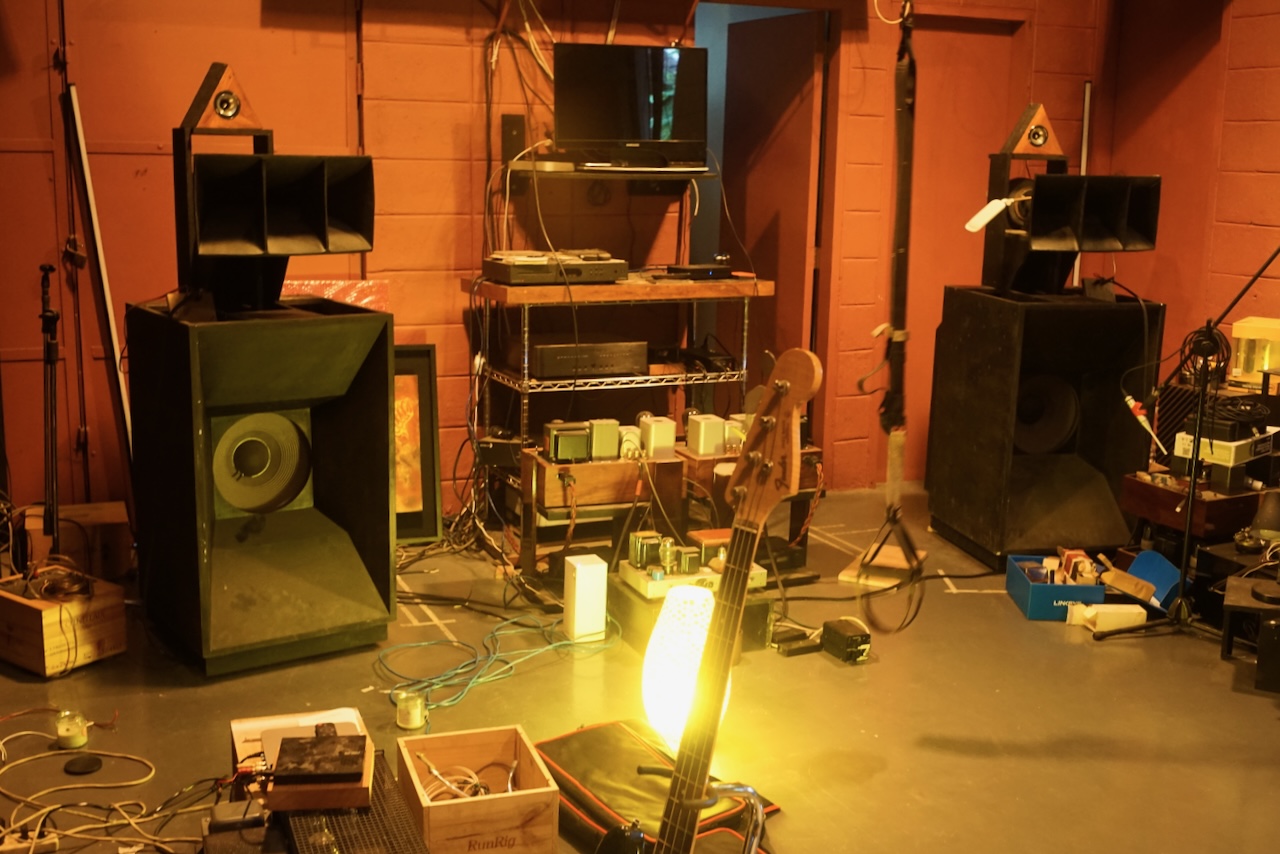
This is an update on crossovers I use for the Altec 2-way speakers.

JEL N1600 Crossover


JEL N1600C + HF EQ
optimized for the 802 driver fitted with the original
16 ohm 20275 diaphragm

The above crossover circuit, as discussed in this previous post, was optimized for my cherished pair of green Hammertone Altec 802Ds fitted with the original aluminum 20275 diaphragm, which has an aluminum wound voice coil. To my ears, this diaphragm has a more prominent midrange response which necessitates rolling off the upper midrange/lower high frequencies of the 414A woofer for flatter response.

JEL Universal Altec 2-way XO

For the Altec 802 driver equipped with the 34852 (16 ohm) or 34647 (8 ohm) diaphragms, which have copper wound voice coils, I recommend the 6dB/octave crossover circuit below which is hinged at around 2500 Hz + high frequency EQ boost. This aluminum diaphragm has less energy in the upper midrange giving a tonal balance that sounds more extended in the high frequencies compared to its 20275 predecessor. In this implementation the Altec 414A woofer is connected as a full-range driver inspired by Joe Roberts. 

JEL Universal Altec 2-way XO with HF EQ circuit

Altec 414A + 32A/802/GPA 34852
+
JEL Universal Altec 2-way XO

I've also used this crossover successfully with the Altec 802 driver fitted with the Symbiotik diaphragm, Emilar EA/EC175 and Renkus-Heinz SSD1800/1400. Please take note of the different capacitor values for 16 or 8 ohm drivers.

Simplest Crossover


If you want the simplest crossover, my buddy Joe Roberts listens to his Altec 414A/802/32 set-up with the woofer in full-range mode + a 1.5uf paper in oil cap for the compression driver, no L-pad or HF peaking EQ circuit. See his Audiokarma post for more details.

Tuesday, December 31, 2013

Altec 2-way horn system redux


Truth be told, I was never fully satisfied with the performance of the Altec 2-way which is why I never uploaded the old article in the Arkiv.

Let's recap how the 2-way horn system evolved...


The project was conceived in mid 1998 because I needed a monitor system that was more efficient than the OB/755 so I could listen to SE amps with 2 watts output and below.

I commissioned my cabinet maker neighbor to build 614 bass reflex cabinets and loaded them with Altec 419A 12" drivers + 811 horns (early version/heavy sand cast) and 804A compression drivers gathered from hamfests and radio shows. Crossover was a textbook 1st order/6dB/octave hinged at 900 hz and the horn padded down to match the sensitivity of the low frequency driver.

Altec 614 cabinet plan

Eventually I acquired proper 12" woofers - Altec 414As, which lack the upper midrange nasties of the 419As. The 414As have great midrange quality even if they lack the bass end of their larger 416/515 brethren.

Note damping is applied only
on two sides and the back.

802D compression drivers replaced the smaller magnet 804As

Altec 802D

+ super tweets...
Altec 3000H 

Series crossover


While exploring proper monophonic playback, I discovered the N1600C crossover which came with a single 605B Duplex I acquired. When I inserted it into my Altec 2-way, it sounded significantly better than the textbook parallel 1st order/6dB per octave crossover I had been using.

N1600C clone


 Using paper in oil caps and low DCR air core chokes, I cloned the N1600C and thought it was as good as it gets with my Altec components...

ca. 2006


Lessons learned over the past 15 years

  1. Choose a woofer with excellent midrange characteristics.
  2. In hindsight, the 804A/811 was a much easier combination to tame than the 802D/811. Perhaps this is due to the smaller magnet on the 804A which makes it 3dB less efficient. Note: the 806A is similar in specs to the 804A but some sources say they are built differently.
  3. Horns sound better crossed over at least one octave above its rated cut off.  I'd go as high as possible if my woofer can play well into the upper midrange.
  4. Don't be afraid to pad down the compression driver which is at least 10dB more efficient than the woofer.
  5. Try series type crossovers like the Altec N1600C above or N1500A which have lower insertion loss due to the 1st order/6dB/octave low pass filter. Note: the high pass section =  2nd order 12dB/octave 
  6. I only use paper in oil caps in my crossover. 


811>32C


Through the years that I had been attending radio shows and hamfests, I got to know people who opened rare opportunities for me to hear the Western Electric 753C, Western Electric 757A and Altec 1505 horns with Western Electric 555 field coil drivers on top of 825 cabinets loaded with 515s. Most memorable was a single Western Electric 15A horn  + WE555 field coil compression driver driven by a pocket FM radio my buddy Ding and I heard at Scott Stilwell's shop in Philadelphia. The huge horn produced mid bass and rolled off like a 755C or 755E. Thus, "shouty," honky or harsh is not something I associate with good horn speakers.

Altec 32C/802D + Altec 3000
trial ca. 2009

A pair of Altec 32C horns I got in trade back in 2009 had been languishing in my storage bin despite realizing its potential after an initial test run. Given the 32C's pedigree - a direct descendant of the metal Western Electric 32A horn found inside a Western Electric 753C monitor speaker - I had an inkling that it would be better than the 811. But a busy schedule and other life matters got in the way. ;)

Replacing the 811 horns with the 32Cs transformed the 2-way horn system. The 32C/802D blended with the 414A/614 without any crossover alteration. If the 811 projects an in your face/front row seat perspective, the 32C is more like sitting at the middle to back row seat wherein instruments and/or vocals have been given enough time to reverberate in the concert hall. Exactly the kind of sound perspective I prefer!

Despite its polite and refined presentation, the 32C retains the transient speed, dynamic ability and top end extension expected from a horn such that I found the use of 3000H horn super tweeters redundant. In fact extreme high frequencies from 32C/802D sounded airier than the 811/802D + 3000H combo. I have a feeling that most detractors of the 90° bent horn design never heard an original Western Electric 753CWestern Electric 757A or even the more recent Altec 9849 monitor speaker.

Although there's another tweak I am experimenting with at the moment, this horn is here to stay. As Johnny Hartmann sings, "...it's wonderful..."

HAPPY NEW YEAR!


Wednesday, March 15, 2017

Radio Shack


In February of 2015, Radio Shack filed for Chapter 11.


So I was delighted to see this Radio Shack store announcing a comeback in midtown Manhattan during a visit in the summer of 2016.

When I was a student in NYC in the 80s, a neighborhood Radio Shack store was just around the block if I needed a resistor or capacitor for a project on a Sunday afternoon. By 2008, I was in the suburbs and Radio Shack was in a strip mall just a mile and a half away. Now I have to drive 35 miles to the next town ;(


In the early 90s, many SE amp DIYers started their foray into efficient speakers inspired by this book by David B. Weems. The speaker projects used various raw drivers from the Radio Shack catalog.

40-1354A


Radio Shack no longer had 2A3 triode tubes on their shelves when Sound Practices started publishing in 1992,  but one could still buy this 5 1/4" full range driver listing for less than $10, IIRC. This speaker was efficient enough to be driven by an SE2A3 amp to satisfying levels.


I used this driver in a compact bass reflex box...

from David B. Weems book

...as well as in a Tapered Quarter Wave Tube (TQWT)


Not quite in the same league of sophistication and refinement as the Altec 2-way, but lots of fun since they can boogie on a couple of triode watts ;)

Time Warp


During a recent "let's see where the wheel takes us" expedition, my wife and I spotted this in Pennsylvania. 

40-1310


As I browsed around the store, a pair of 40-1310 super tweeters bearing their original sticker price immediately caught my eye. I told my wife about them and she insisted that I get this pair of NOS Chinese-made plastic version for $60 + tax, so I can time travel.


These drivers developed quite a following in the 90s because the original all-aluminum units embossed Realistic were allegedly OEM'd in Japan by Fostex. The graphs above and below should corroborate this speculation. Later versions with a plastic pod and horn were subcontracted in South Korea and then China.

Fostex FT17H

I didn't join that 90s bandwagon. Instead, I bought a pair of the equivalent Fostex FT17Hs sans pod from Madisound for $70. I used them as super tweeters for Altec 755Cs and 755Es until they were superseded by a pair of superior Altec 3000Hs.

 Brand new Fostex FT17Hs are now made in China and can be had for a little less than $100/pair. I still believe they are excellent value for the money. Perhaps the early Japanese all-aluminum 40-1310s can command a slight premium, but beware of unscrupulous eBay flippers asking ridiculous amounts for the plastic version.

Subtlety


Before inserting the 40-1310 into the Altec 2-way, I bypassed the built-in electrolytic cap/choke crossover components. For the past 20 years, I've been using smooth and natural sounding paper in oil caps in the signal path of my preamp, amp and crossover, nothing else.

Altec 2-way + 40-1310

Altec 2-way sans 40-1310

In this application, the 40-1310's positive terminal is protected by a 1uf PIO cap and then connected to the high-pass section of the crossover. The effect of the super tweeter is subtle...just a touch more air.


As I was about to sit back to reminisce the 90s with the 40-1310, an internet friend informed me that Radio Shack just filed for another bankruptcy claim ;(

This prompted me to visit my favorite branch...


...fingers crossed. ;(

Monday, April 1, 2019

Altec 753C

After many years of raving about the Altec 32 horn, the only stone left unturned was using it as it was originally designed, that is, with the compression driver oriented to radiate upwards.

Last year, I received a message from John Piro, whose beautifully crafted preamp project was previously featured in this blog. He sent me pictures of his interpretation of the legendary WE753C using an Altec 414-16B woofer + Altec 32A + Faital Pro driver

Altec 414A + 32C + 802D + 20275 

I was very impressed and requested if he could build a pair for me. We finally met at the Kutztown Radio Show last September. He and his wife had dinner here at home when he delivered my beautiful cabinets!

A Western Electric 753C used as a monitor at WABF in the early 50s

As an homage to the legendary Western Electric 753C, which was a major inspiration for this project, I henceforth christen this speaker system as the Altec 753C.

Altec 2-way XO redux

I've settled on running the 414A woofers in full range mode (ala J-Rob) and replaced all the crossover resistors with non-inductive 12W Mills. This took away the last vestiges of grain in the upper frequencies.


RTA Graphs

Altec 2-way

Altec 614 + 414A + 32C + 802 with GPA34258

The above RTA was taken from this blog entry

VS

Altec 753

Altec 753 + 414A + 32C + 802D with 20275

I could've lived happily with my Altec 614 or repurposed 861 (aka Madrid) cabs + the inverted 32 horn situated on top. However, with proper horn orientation, the sound was taken to another level of refinement. Now the blend between the 414A and horn is practically seamless and I bask in the airiness of the top end, which I attribute to significantly improved high frequency dispersion, precisely as envisioned by Western Electric engineers.

In spite of the stellar midrange performance of the Open Baffle mounted Altec 755As, I started the Altec 2-way project in the late 90s to address the following issues:

1. More efficiency
2. Extend the frequency extremes
3. Less congestion in dynamic peaks with complex musical passages

After 20-some odd years, those goals have been realized. The Altec 753C is pretty much end game!


Thanks to my buddy Joe Roberts, who explained the intricacies of proper 32 horn orientation. The idea was carefully stored in my mind. I just had to wait for the right opportunity to implement it. And of course, a big thanks to my friend John Piro (aka RCA NUT), craftsman extraordinaire!

Let's hear some music. 😊


Tuesday, January 28, 2014

Altec 2-way XO update


The Altec N1600C series crossover has been a significant constituent in the evolution of my Altec 2-way horn speaker system. C. G. McProud's 1947 article on page 101 of Audio Anthology, Volume 1, was my first encounter with series crossovers although Western Electric was already using the topology in the 1930s. As an aside, my knowledge of electronics is basic. I don't even own a circuit simulation program and rely on my collection of audio electronic textbooks, old magazines plus what my ears tell me as reliable internet sources for "techie stuff."

JEL/N1600C 2-way Crossover

Based on Earl K's simulations and analysis at the Lansing Heritage forum, Altec configured the N1600C 2-way crossover with staggered filters. In this application, a 2nd order/12dB/octave high pass filter @ ~ 1600 hz is provided by the 4 uf capacitor + 1mH inductor, while the 1mH inductor series connected to a 16 uf capacitor functions as a 1st order/6dB/octave low pass filter @ ~ 1100 hz. The 30 ohm potentiometer is part of an upper midrange frequency attenuator/high frequency EQ boost circuit I derived from reading through Altec 30923 discussions at Audio Karma and at Lansing Heritage. Altec incorporated this circuit in their Model 19 crossover and Jeff Markwart used it in his phase corrected Altec 605 crossover. 

In subjective terms, the combination of staggering the crossover point + upper midrange attenuator creates a "dip" in the crossover region where harshness and congestion can easily be detected by critical listeners, while my Altec 3000H tweeters were made redundant by the high frequency EQ boost.

Outboard crossover built using
paper in oil caps, low DCR air core chokes and
non-inductive resistors


Thursday, July 2, 2020

Reality Check: Musical Instrument Frequency Chart + A Tidbit of Wisdom from Radiotron 3rd Edition


Musical Instrument Frequency Chart


This musical instrument frequency chart should serve as a reality check for those who obsess about metrics. During the triode era and up until cycles per second (cps) was replaced by kilohertz (kHz), a bandwidth specification of + or - 1dB from 30-15,000 cps was considered state of the art. That old standard actually made more sense if we look at the bandwidth of acoustic instruments in the chart above.

The chart is also a practical reference for all of my speaker/driver/horn articles past, present and future. Likewise, it is a handy visual aid to interpolate the pink noise + iPhone Real Time Analyzer (RTA) app traces even if in most cases they don't correlate to what we hear.😆  

In a couple of instances, an RTA trace has agreed with what I heard. In reality though, pink noise and other waveforms used for audio testing have nothing in common with musical notes and harmonies. Audio measurement is very far removed from the dynamic nature of music. To me, the RTA, audio generator and oscilloscope are tools that can be helpful if used with discretion.

Altec 755A in an Open Baffle


My adventure into high-efficiency speakers started with a pair of Altec 755Cs (and later, 755As) mounted on this very same open baffle. It was easy for me to appreciate the lack of boxy coloration, having lived with Quad ESLs for a couple of years.


Most open baffle detractors complain about the lack of bass response. However, the above trace doesn't pale too much in comparison to the Altec 755A + Dr. Bae/Silbatone box and Altec 755A + 618 below, even if it does look ugly!🤣

Maybe the suck out between 250-1kHz is what I hear as the absence of cabinet coloration or the "lack of snap" J-Rob heard?

Dr. Bae/Silbatone Box + Altec 755A


Despite being very compact, this empirically designed box exploits the fullest potential of the 755A driver. 


This trace looks better than the 755A + OB above but not as nice as the Altec 755A + 618 trace below.

Altec 755A + Altec 618

[2 cubic foot sealed box]


A pair of Altec 618 cabinets

The Altec 618 is the classic 2 cubic foot sealed box for the 755. It has to be rigidly braced to minimize upper bass/lower midrange coloration, although some listeners may prefer that "warm" bloom.

Altec 755A in the 618 box

This trace is the flattest of all three. But subjectively, the Dr. Bae/Silbatone box + 755A sounds more neutral and tonally more accurate. I don't hear the sudden rise from 1 kHz and peaks at 1.5 and 2 kHz. 

The Altec 618 box is now loaded with 755Cs and has great synergy with the JLH 1969 clone amp.

Altec 753C


 My exposure to the Western Electric WE757A and WE753C in the late 90s inspired the Altec 2-way project. The sound of those two classic speaker systems was already familiar. They sounded very similar to the 755A with more extension in the low end + airier highs. But what really sent me on a quest to emulate them were: greater efficiency so that I can enjoy my flea powered SE-DHT amps and less congestion (more layering and instrument separation) at higher SPLs. The Altec 753C is the final destination of that journey. 

Along the way, the Altec 755A was my loyal guide for midrange accuracy and coherence, which is why I discussed the driver in its various guises above.

Altec 414A in the ported 753C cabinet

The Altec 414A woofer running in full-range mode covers at least six octaves, from 45 Hz until it starts rolling off in the 3 kHz region. Unlike most drivers of this size and type, this is very smooth-sounding and delivers a great midrange without nasty cone break up modes up to its natural roll off point.

Prior to using the 414A, I had a pair of Altec 419A Bi-flex. I also seriously considered a pair of Altec 416A but both drivers exhibited nasty peaks starting from 1-3 kHz. Now I wonder if those peaks would've been visible using pink noise + my iPhone RTA app? 

I could've studied how to filter the peaks using EQ. However, all these extra crossover circuit complications would've adversely affected the efficiency of the speaker system, which I wanted to avoid. In the end, I stuck with my original plan of keeping it simple.

Altec 414A


Fundamental frequencies below 45 Hz may look rolled off in the trace but the harmonic overtone series (hence, harmonics or harmonic overtones) of the frequencies below the roll off point reinforce the [weak] fundamental in making those lower frequencies audible in actual musical reproduction. The BBC LS3/5A is a good example of a small speaker that "reproduces" low frequencies via harmonic overtones. 

My straightforward explanation: A:27.5 Hz played on an upright piano will produce less intensity as a fundamental note compared to that from a nine-foot concert grand because the instrument is physically smaller and the length of string, shorter. However, that upright piano's A:27.5 Hz is still perceived as A:27.5 Hz by the human ear, albeit less visceral, because of the harmonic overtones produced. 

Due to the 414A's sharp roll off past 3 kHz, the upper frequencies need reinforcement. 

Altec 32C horn + 802D + 20275 diaphragm
XO below

For many years, I struggled to make the Altec 811 horn work in this context. I started crossing it at around 900Hz @ 6dB/octave slope. Then, I cloned the Altec N1600C crossover, which effectively raised the crossover point an octave higher with a sharper 12dB/octave slope. 

None of these crossovers could blend the 414A and the 811/802D coherently to mimic my favorite full-range driver, the 755A. The "shouty distortion" was always present even with a simple 2 uf paper in oil cap + variable L-pad.

Altec 32C + 802D

After several years of frustration to the point I almost gave up, a fortuitous meeting with the Altec 32C horn opened a whole new world for the better.😄 It turned out that the objectionable "shout" I was hearing emanated from the Altec 811 horn.

The Altec 32C horn + 802D driver combo fill in the last 2 octaves of fundamentals + another 2 octaves of harmonic overtones using the high-pass crossover below. 

Sound Practices


I've learned so much from getting to know the Altec 755A, 755C414A, 802D and 32C intimately as well as from the other components that I ultimately rejected. 

The countless hours I spent assessing and listening to these transducers individually is a sound practice I highly recommend to audio DIYers!

Simple Crossover


Ever since I discovered the sonic delights of paper in oil as coupling capacitors in the signal path of preamp and amp circuits, I've also adapted their use in crossovers. 

Altec 753C crossover using paper in oil capacitors + Mills
non-inductive resistors
schematic

I've found the RTA to be helpful in adjusting crossover points with the help of a crossover calculator. A simple example: if the sound is harsh, move the crossover point higher. If you need more bite or presence, go lower.


Altec 414A + 32C horn + 802D compression driver  +
JP 753C ported cabinet = Altec 753C

If I were to summarize, the Altec 753C sounds lush and romantic!


Driven by 3500 milliwatts per channel of SE-DHT power, these speakers allow me to enjoy Mahler symphonies in my man cave with nuanced macro and micro dynamic contrasts. It gives a middle of the hall presentation which is my preferred perspective. The midrange is warm and coherent with a nice three dimensional quality.

Even if the extreme lows are curtailed, the harmonic overtones produced in this frequency region have enough foundation for big orchestral works. There's a wispy ribbon-like airiness in the extreme top which, to my ears, no longer need help from my pair of Altec 3000H super tweeters.

I probably could've gotten another half octave of bass extension if I chose the 15" Altec 416A woofer, but then I would've run into problems blending it with the 32C/802D horn/driver using a simple crossover. Even if I succeeded in EQ'ing out the peaks of the 416A, efficiency and midrange coherence would've suffered.

Everything is a compromise and I believe I've chosen wisely.

Wanted: smooth sounding 12"-15" wide range driver + horn + compression driver


Although Great Plains Audio is still manufacturing the 414 and 802 drivers with alnico magnets, IMHO, the listed prices are too steep to even attract the attention of the DIY community or smaller boutique manufacturers. 

I've used and highly recommend their replacement aluminum diaphragms for 1" format compression drivers. I've been told that the GPA 414 doesn't sound like the classic 414A/Z/8B/16B and is 3dB less efficient. However, I don't have hands-on experience with the GPA drivers to confirm any of those claims.

GPA is our only direct connection to the past when transducers were designed using human ears aided by measurement tools. For that alone, I want them to succeed!

Radiotron, 3rd Edition Redux


Let's (re)visit a topic that has served the interest of the entire audio industry, except the bottom-line of this hobby - the enjoyment of music!


Sad to say, no one has heeded D. Massa's advice. 

Besides, the test tones used for distortion analysis have no bearing whatsoever to the highly dynamic and complex harmonies contained in the simplest musical score.


Yup, this was 80 some years ago and there still are self-proclaimed audio pontiffs who insist on this metric!🙄